How to Sell a House with Code Violations in Minnesota: Legal Framework, Local Requirements, and Strategic Options
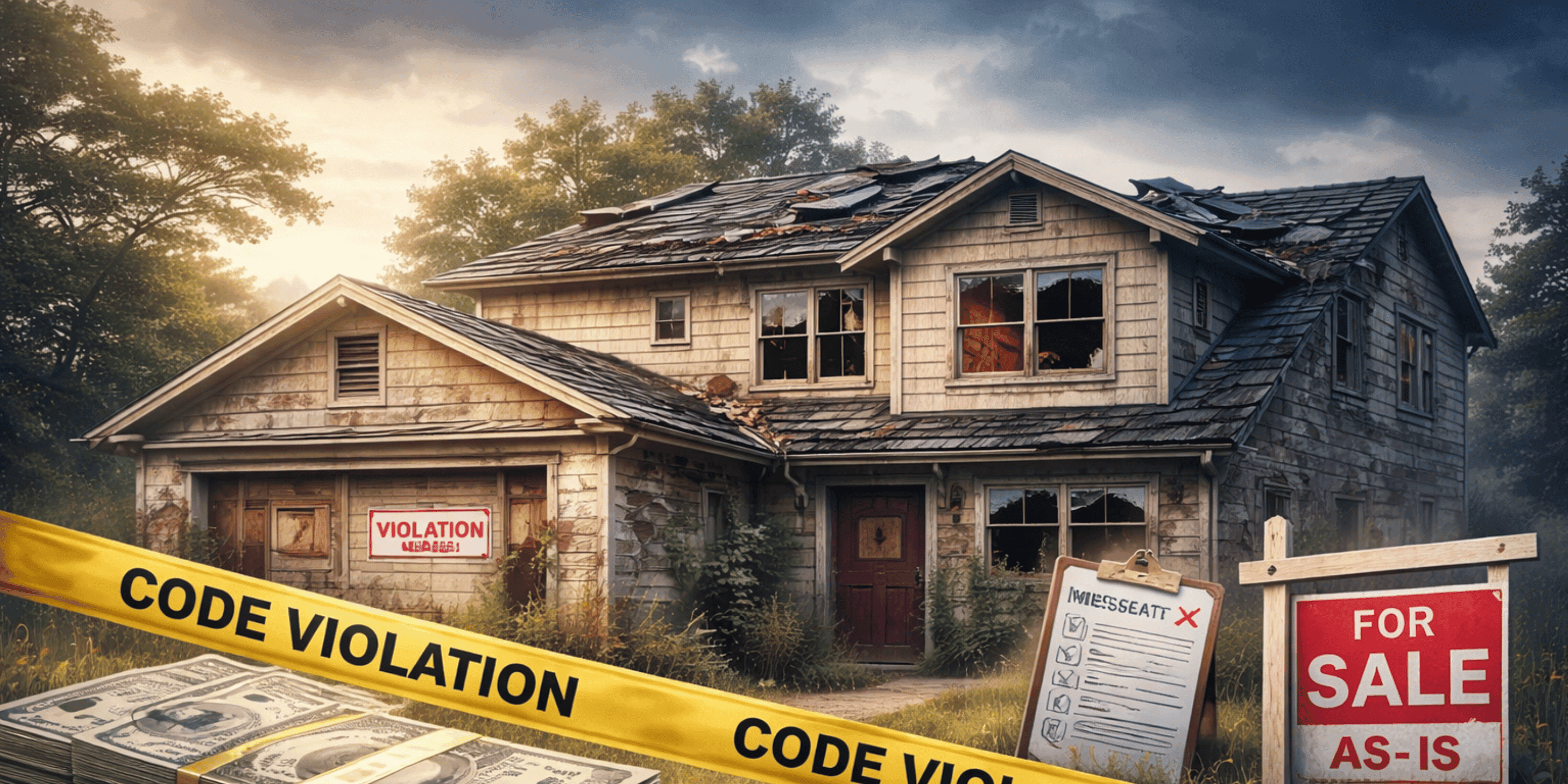
Selling a home is rarely straightforward, but the process becomes significantly more complex when the property has code violations. In Minnesota, these situations are governed by a combination of state disclosure laws and city-level enforcement mechanisms, creating a layered regulatory environment that can delay or even prevent traditional real estate transactions. For homeowners, code violations can feel overwhelming, especially when combined with financial pressure, time constraints, or major life transitions. For real estate investors and acquisition companies, however, these properties represent a specialized segment of the market where expertise, speed, and flexibility can create meaningful value.
For homeowners under pressure — especially those who need to sell house fast or are exploring how to sell your house as is for cash — understanding available options becomes even more critical.
Understanding Code Violations in Minnesota
Code violations occur when a property fails to comply with local building, housing, or safety regulations. In Minnesota, these regulations are enforced primarily at the municipal level, meaning each city—such as Minneapolis, St. Paul, Bloomington, or surrounding suburbs — has its own inspection systems, compliance standards, and enforcement procedures.
Common violations include:
- Structural deficiencies (foundation issues, unsafe decks, deteriorated roofs)
- Electrical or plumbing systems not meeting current code
- Heating or ventilation deficiencies
- Unpermitted additions or remodeling work
- Exterior maintenance issues (peeling paint, broken windows, siding damage)
- Occupancy or rental license violations
Violations can range from minor maintenance items to serious safety hazards. In more severe cases, cities may issue orders declaring a property “unfit for occupancy,” or even condemn the structure entirely.
Legal Disclosure Obligations
Minnesota law imposes clear disclosure requirements on sellers. Under Minn. Stat. § 513.55, sellers must disclose all known material facts that could adversely and significantly affect the use or value of the property.
This includes:
- Active code violations
- Notices of required repairs
- City inspection reports
- Known unpermitted work
- Any condition affecting safety or habitability
Failure to disclose these issues can result in post-closing liability, including lawsuits for misrepresentation or rescission of the transaction. Importantly, these obligations apply even if the property is sold “as-is.”
“As-is” does not eliminate disclosure duties—it simply means the seller is not agreeing to make repairs.
Municipal Enforcement Authority
Cities in Minnesota have broad authority under statutes such as:
- Minn. Stat. § 412.221
- Minn. Stat. §§ 463.15–463.26
They can:
- Issue repair deadlines
- Impose fines
- Require permits and inspections
- Add costs as property assessments
- Order condemnation or vacancy
These actions directly impact your ability to sell.
City-Specific Requirements: A Critical Factor
One of the most important aspects of selling a home with code violations in Minnesota is understanding local requirements, which vary significantly by city.
Minneapolis (TISH Program)
Minneapolis requires a Truth-in-Sale of Housing (TISH) evaluation before a property can be listed. The TISH report identifies code violations and required repairs.
Key implications:
- The report must be disclosed to buyers
- Certain items must be corrected within a specified timeframe
- Buyers may assume responsibility for repairs under some conditions
- Escrow holdbacks may be required.
St. Paul (Certificate of Occupancy)
St. Paul requires a Fire Certificate of Occupancy or Code Compliance Inspection.
Key implications:
- All violations must typically be corrected before occupancy
- Code compliance inspections can be extensive and costly
- Properties may not be legally occupied or sold without compliance.
Suburban Cities (e.g., Bloomington, Brooklyn Park, Maplewood)
Many suburban municipalities require:
- Time-of-sale inspections
- Compliance certificates
- Repair agreements or escrow requirements
These requirements vary widely, making local knowledge essential.
How Code Violations Affect Traditional Sales
Code violations often make traditional selling difficult:
1. Financing Issues
Most lenders require safe, habitable homes—major violations can block loans.
2. Inspection Problems
Deals often fall apart after inspections.
3. Smaller Buyer Pool
Fewer buyers are willing to take on repairs.
4. Delays
Permits and inspections slow everything down.
Seller Options: Choosing the Right Strategy
Option 1: Repair Before Selling
Best for maximizing price, but requires:
- Time
- Money
- Risk of uncovering more issues
Option 2: Sell As-Is with Negotiation
Works when:
- Violations are minor
- Property still qualifies for financing
But often fails with serious issues.
Option 3: Sell to a Cash Buyer (Most Practical)
For many homeowners—especially those searching how to sell my house fast or sell my house fast Minneapolis—this is the simplest path.
Benefits:
- No repairs
- No financing delays
- Faster closing (7–21 days)
- Lower risk of deals falling through
This is ideal if you:
- Need to sell my house for cash quickly
- Own a distressed or inherited property
- Are facing financial pressure
Companies that operate as cash home buyers in Twin Cities or we buy houses in Minnesota specialize in these situations.
Investor Perspective: Where Opportunity Exists
From an investment standpoint, properties with code violations represent a distinct niche.
They typically:
- Trade at a discount
- Face limited competition
- Offer strong value-add potential
However, they require careful due diligence, including:
- Estimating repair costs accurately
- Understanding city compliance requirements
- Evaluating permit timelines
- Identifying outstanding fines or assessments
Companies like Homestead Road are particularly well positioned in this space due to their ability to:
- Act as a reliable home cash buyer
- Close quickly
- Handle compliance and renovation
Selling your house with code violations in Minnesota is complex but manageable with the right approach. State disclosure laws, municipal enforcement, and financing constraints all play critical roles in shaping the transaction.
For homeowners, the key is understanding available options and aligning them with financial capacity, timeline, and risk tolerance. For investors, these properties represent an important opportunity to create value while solving real problems for sellers. In an environment where housing supply remains constrained and regulatory requirements are increasing, the ability to navigate code violations effectively is not just an advantage, it is a competitive necessity.